
Rock painting is an artistic and tranquil activity that enables artists of all abilities to turn ordinary stones into stunning works of art. No matter your level of experience or wish to move forward, selecting the best brushes and tools for rock painting plays a major role in achieving clean designs and professional-looking results. Rock Painting becomes more easier when the proper tools are used, but it can also improve accuracy, durability and imagination.
This guide can show you how to select the best brushes and tools for rock painting, as well as how to produce the best results.
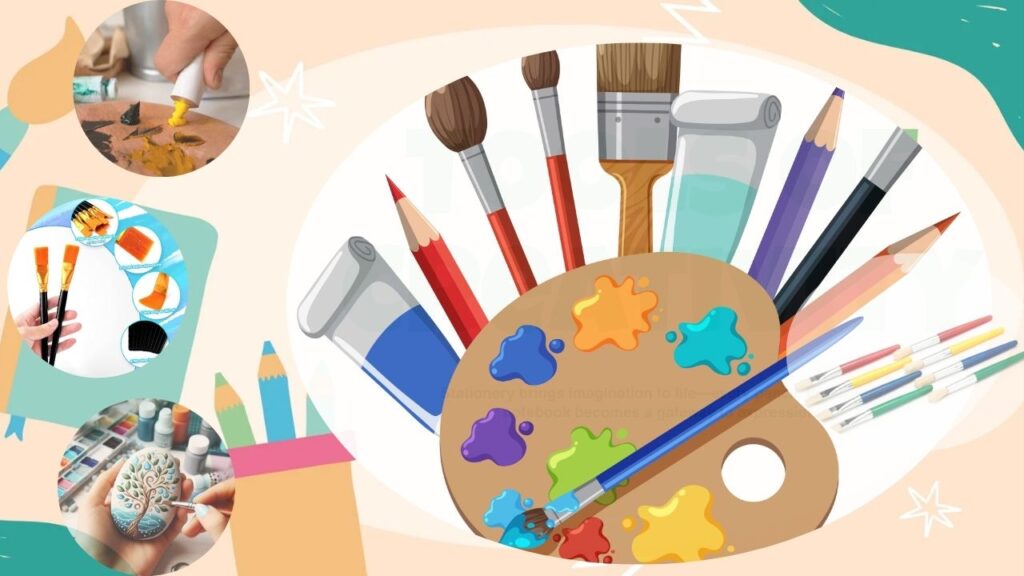
Why Picking the Proper Best Brushes and Tools for Rock Painting Is Important
Stone surfaces differ from those of paper or canvas. Their surfaces are typically rough, uneven and hard. Normal painting tools might not always function adequately because of it.
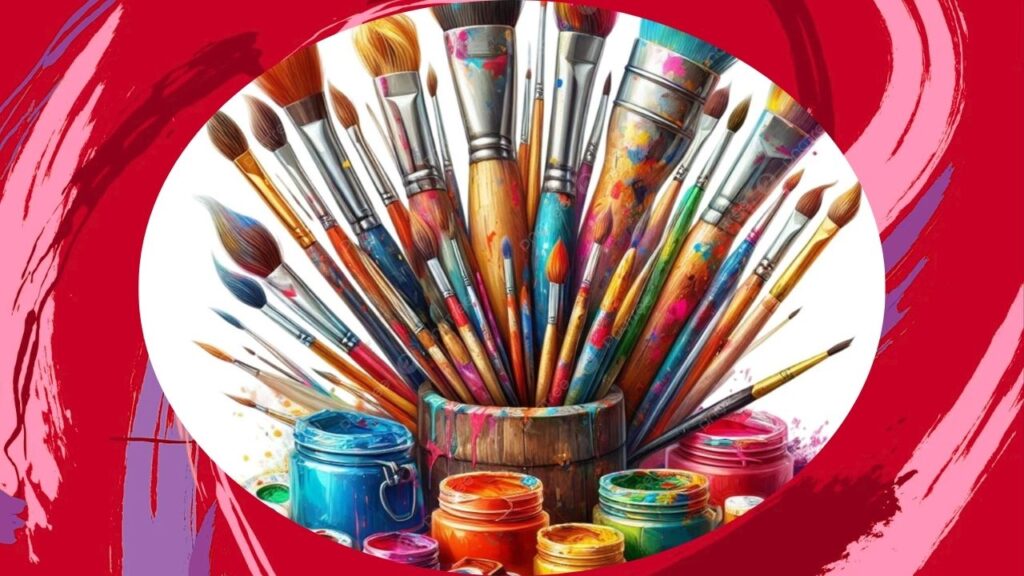
Use of best brushes and tools for rock painting can support you :
- Smoothly apply paint on uneven surfaces
- Make clear lines and delicate textures
- Minimize less paint waste
- Boost accuracy and control
- Extend the life of your artwork
Anyone may easily produce beautiful rock art with the right tools.
Top 4 Best Brushes for Rock Painting
1. Round Brushes
The most common brushes for painting rocks are round brushes. They are perfect for outlines, specifics, and small designs because of their pointed tips.
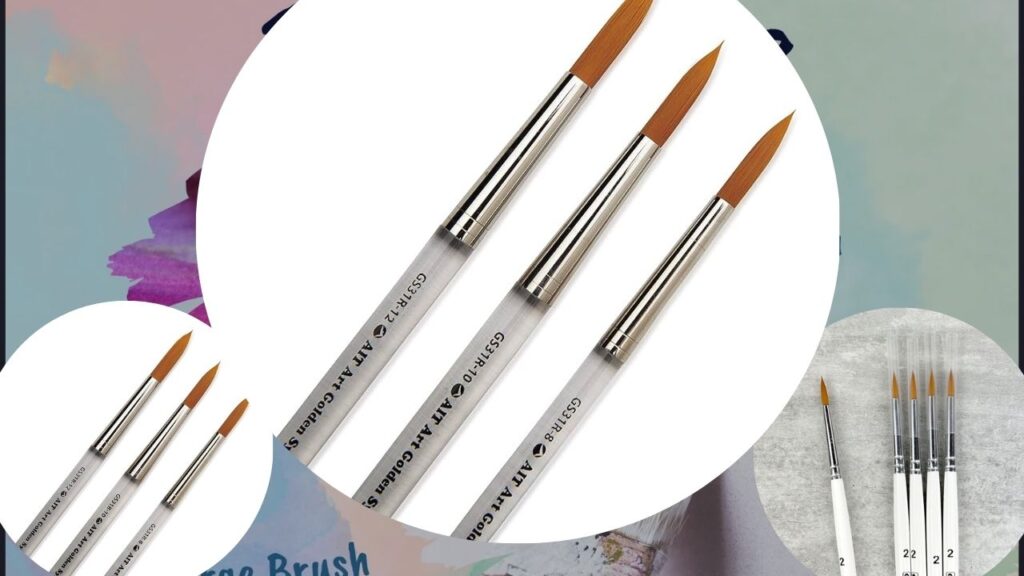
Best for:
- Delicate lines
- Specifics
- Writing on stones
Every stone painter needs a number of round brushes of various sizes.
2. Flat Brushes
Straight-edged Flat brushes are ideal for quickly covering larger areas.
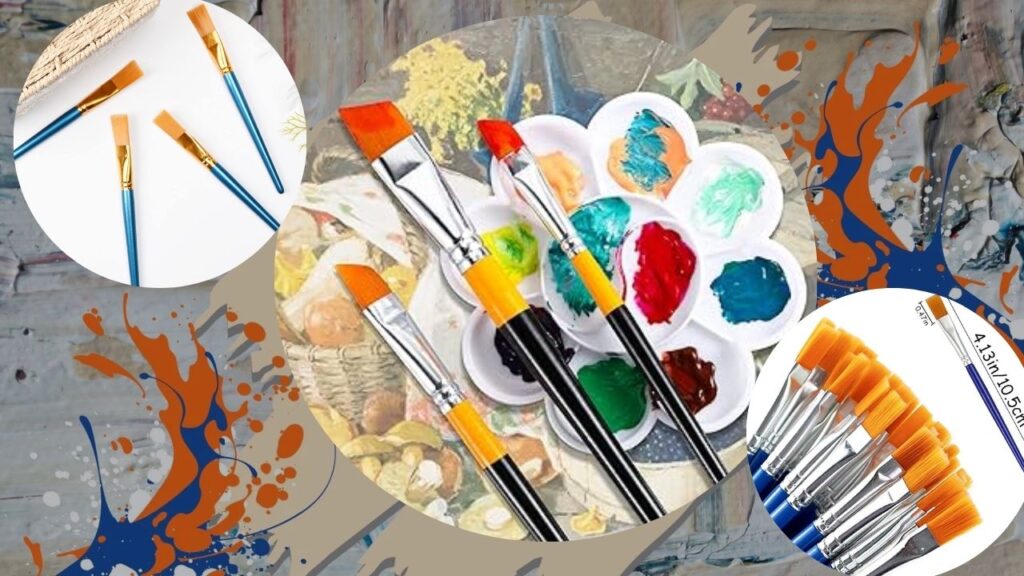
Best for:
- Base coatings
- Painting the background
- Straight lines
They expedite the preparatory process and help for the smooth application of paint.
3. Detail Brushes
Detail brushes are very fine and accurate. They are necessary for small designs and complex patterns.
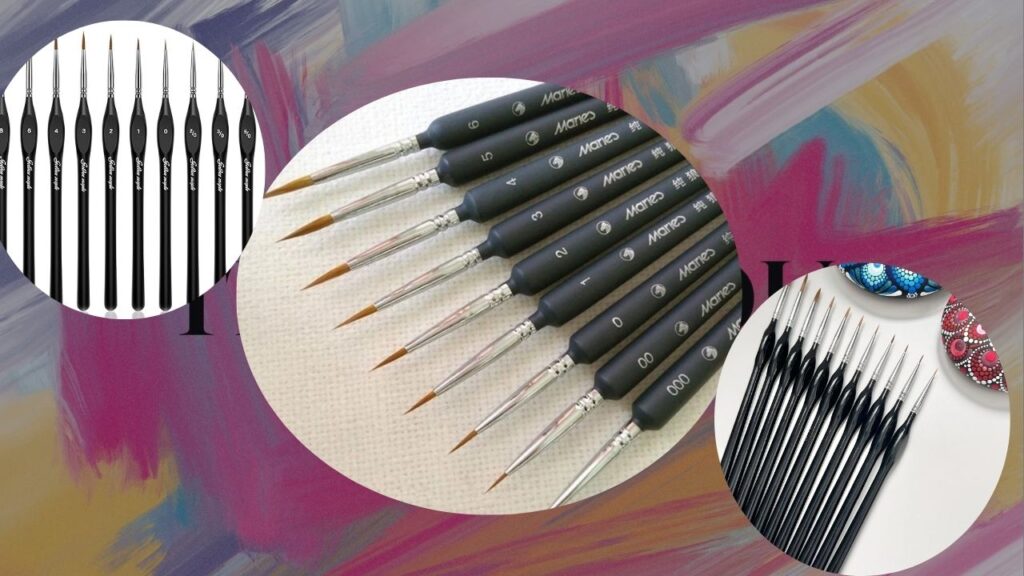
Best for:
- Designs of mandalas
- Features of the face
- Well-defined outlines
Detail brushes are among the greatest tools and brushes for stone painting if you enjoy complex artwork.
4. Fan Brushes
Fan brushes can be helpful for special effects, although they are uncommon.
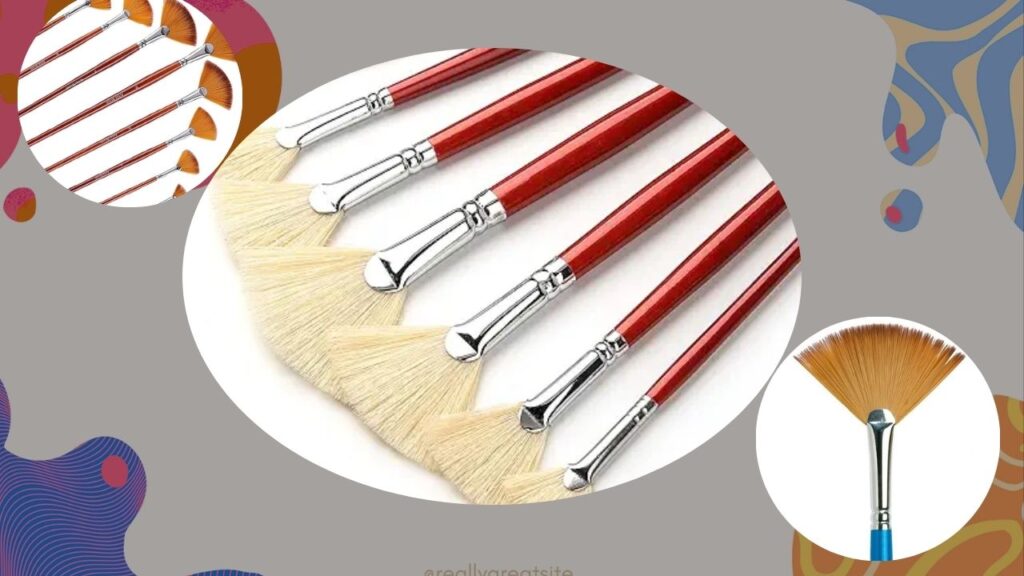
Best for:
- The impact of texture
- Patterns like grass or feathers
- Gentle color blending
Necessary Tools for Rock Painting
1. Tool for Dotting
Dot art and mandala stone painting both make extensive use of dotting tools. They assist make uniform dots and are available in various sizes.
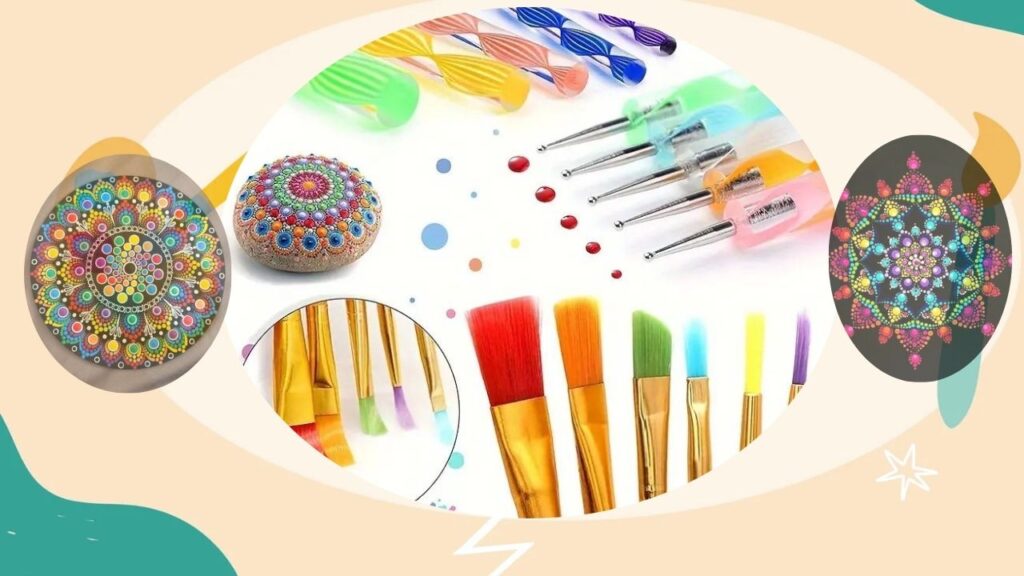
Best For :
- Simple to use for beginners
- Make neat, reliable dot patterns
- Excellent for artistic designs
Items from the home, such as cotton swabs or toothpicks, can also be useful.
2. Paint Pens
Paint pens are great for writing, drawing crisp lines, and outlining.
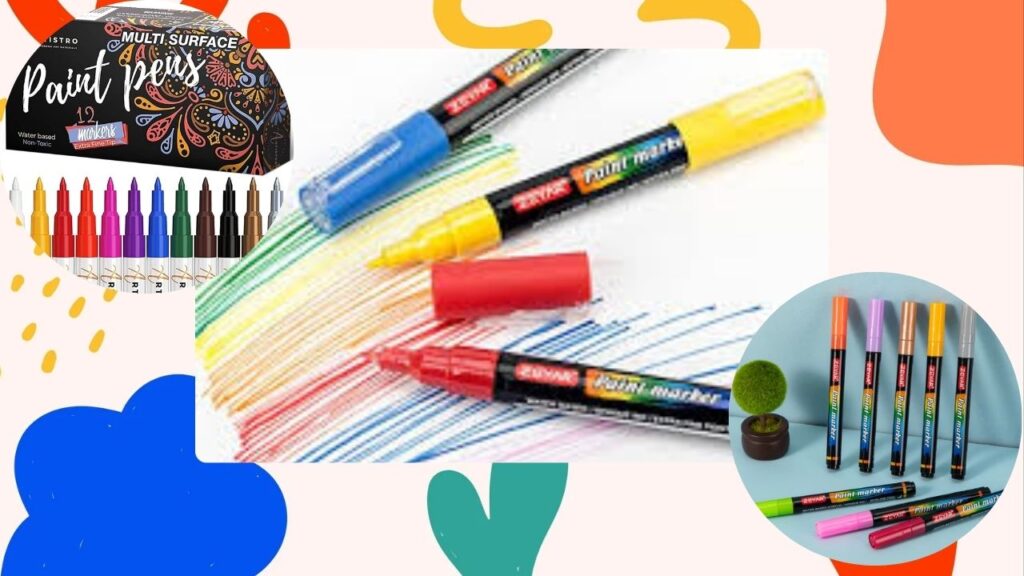
Best For :
- Quotes on stones
- Clear outlines
- Children’s projects using stone painting
They are incredibly beginner-friendly and provide more control than brushes.
3. Palette or Mixing Tray
A palette keeps your work area neat and facilitates color mixing.
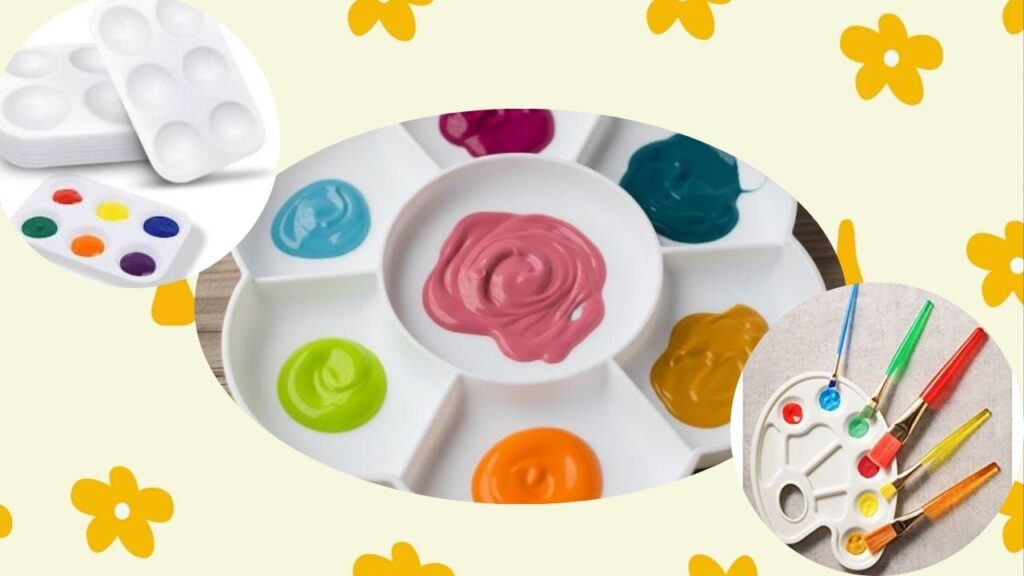
If you don’t have a professional palette, use a ceramic plate or a plastic lid.
4. Sealers and Varnishes
Sealing is essential once your artwork is complete, particularly for outdoor stones.
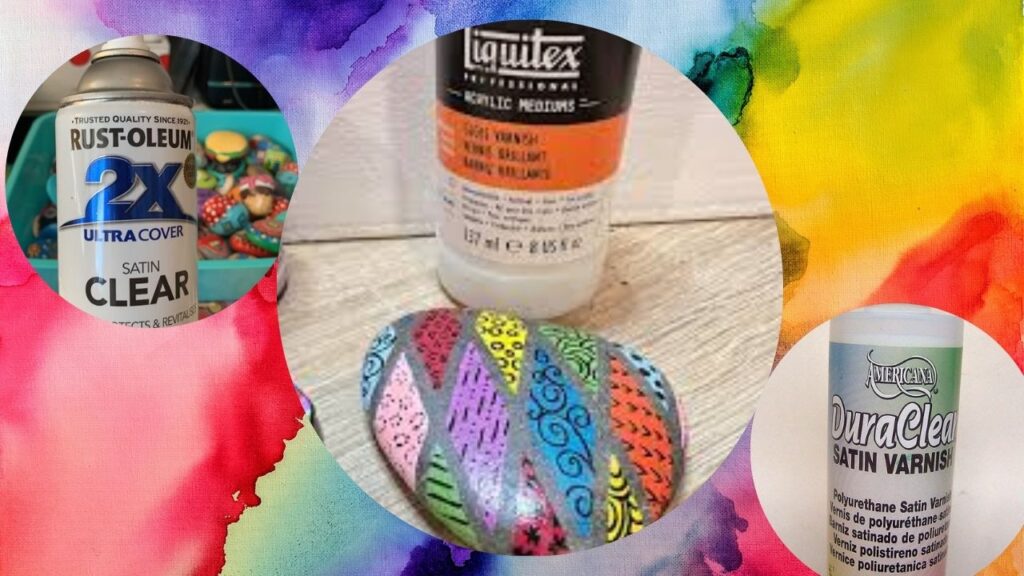
Sealer types:
- Gloss sealer for a glossy appearance
- Matte sealer for a more natural appearance sealants shields your artwork from weather damage, fading, and wetness.
5. Sponges
Sponges work well for producing smooth backgrounds and textured effects.
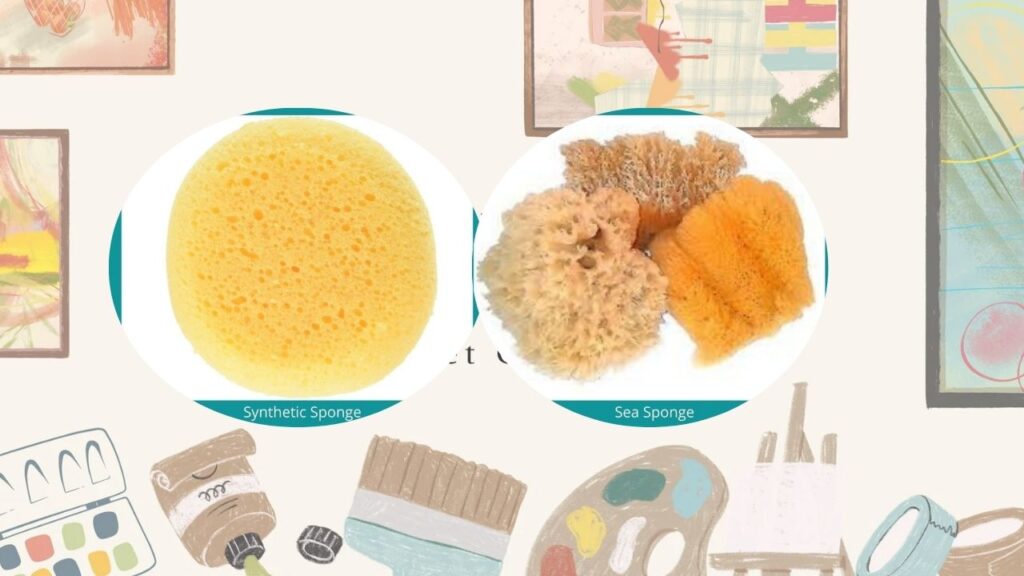
Best For :
- Backgrounds with gradients
- Color effects that are blended
- Soft basic layers
6. The Best Paint for Rock Painting Brushes and Tools
Paint quality is just as important as brushes and tools. The most common option for painting stones is acrylic paint.
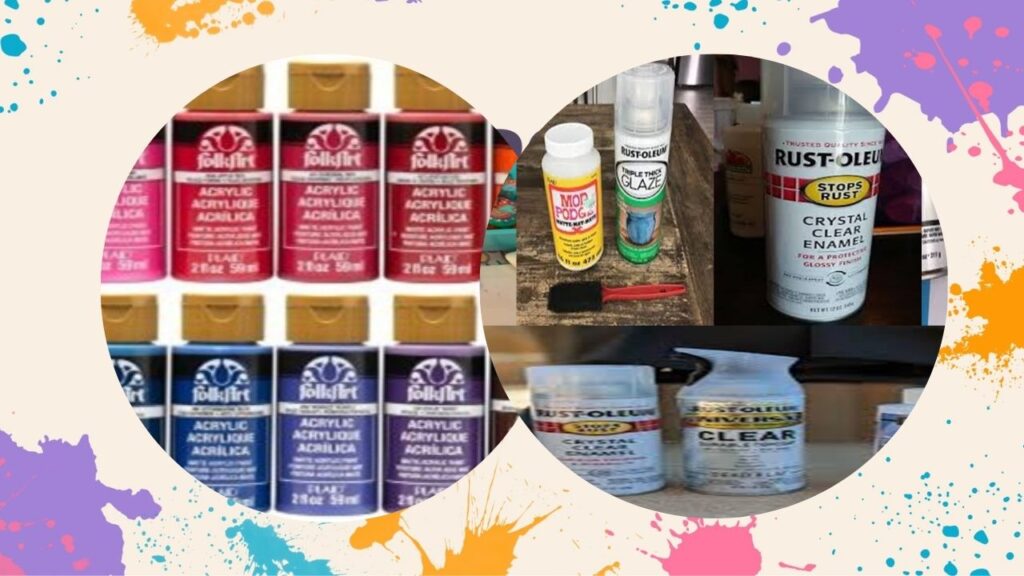
Why acrylic paint is the most effective:
- Vibrant color pigmentation
- Rapid drying
- After sealing, water resistance
- Easy to use with all stone painting tools
For longer durability, choose weather-resistant acrylic paints for outdoor applications.
Tips for Choosing the Best Brushes and Tools for Rock Painting
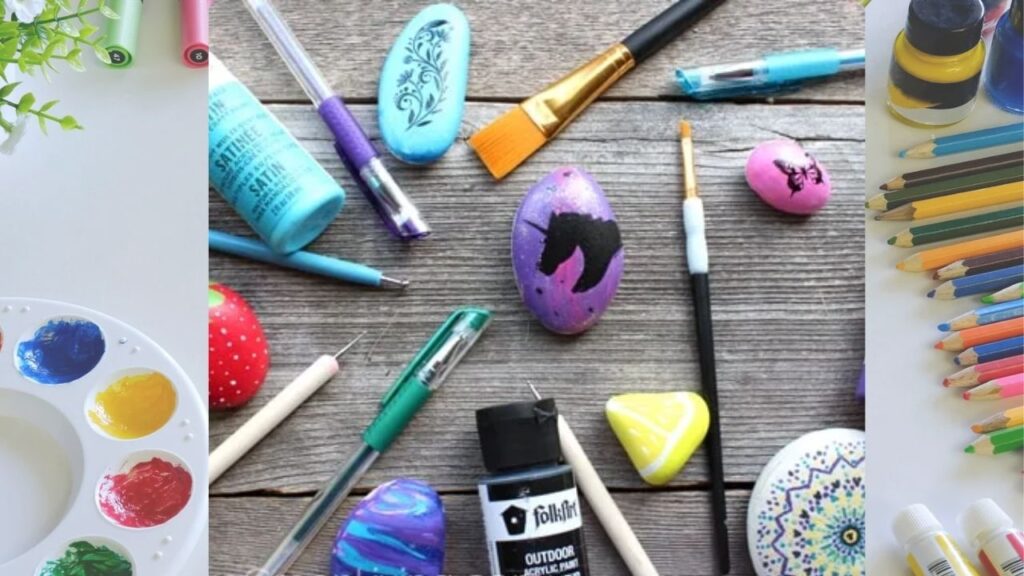
- For smoother strokes, use soft, synthetic brushes
- Begin with a simple brush set and gradually add more tools
- After using brushes, clean them right away.
- Stay away of inferior brushes that break bristles
- To prolong the life of tools, store them appropriately.
Buying the finest stone painting brushes and equipment doesn’t have to be costly; it just requires making appropriate choices.
Basic Mistakes to Avoid
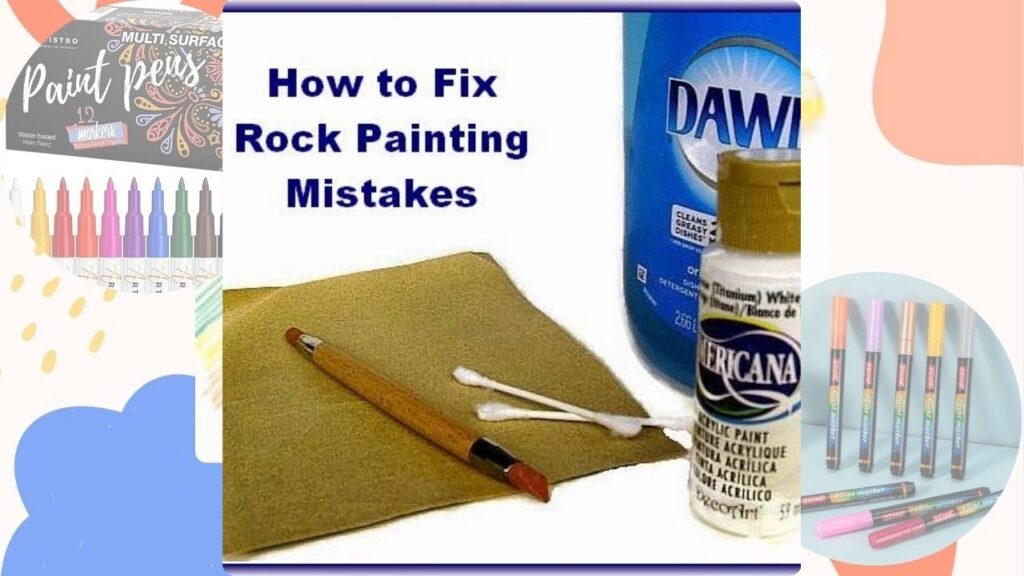
- Making use of outdated or broken brushes
- Using an excessive amount of paint at once
- Forgetting the sealing stage
- Improper tool cleaning
- Making details with the wrong brush size
Your painting experience and results will be significantly enhanced by avoiding these mistakes
Conclusion
Although Rock Painting is a creative and enjoyable activity, but the equipment you use will greatly affect the outcome. You can paint with speed, accuracy, and confidence by selecting the best brushes and tools for stone painting. Each tool, from sealers and dotting tools to round and detail brushes, has a special function in producing stunning stone art.
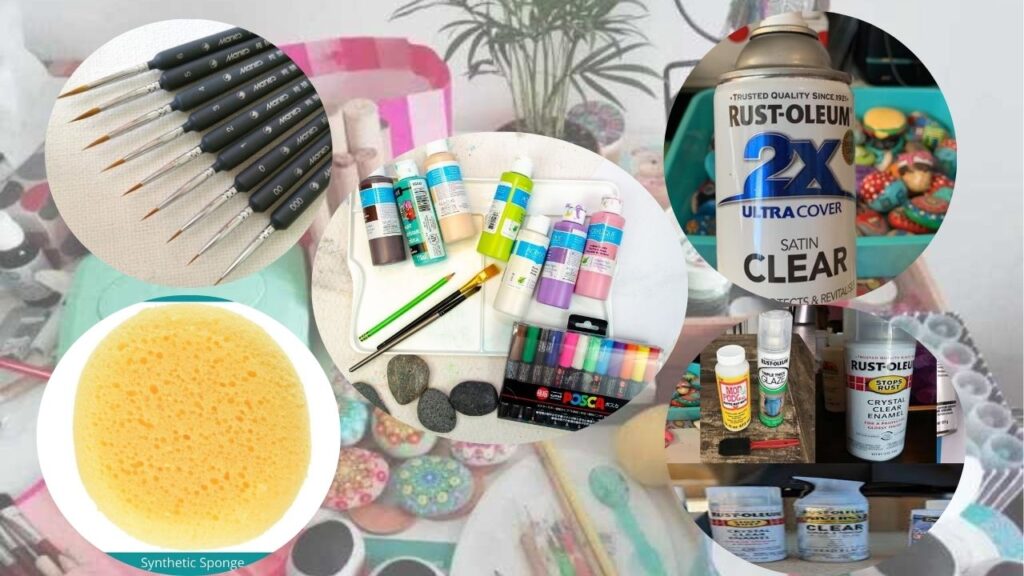
The correct equipment may transform a simple activity into a pleasurable and fulfilling art form, whether you paint rocks for decoration, presents, or relaxation. As your abilities develop, start with the basics, practice frequently, and progressively experiment with additional tools.